
.svg)
Engaging the Right Buyers in a World Obsessed with Volume
For years, B2B SaaS growth has been shaped by a simple reality: lead volume is easier to measure, report, and defend internally than lead quality. Outbound activity and high-volume top-of-funnel programs persist not because marketers ignore quality, but because volume remains the most visible signal of progress. As a result, demand strategies often skew toward what can be counted, even when that activity has limited impact on pipeline and revenue.
As buyer needs shift, it becomes harder to know which messages or use cases will resonate. In that uncertainty, volume becomes a safety net rather than a signal of relevance.
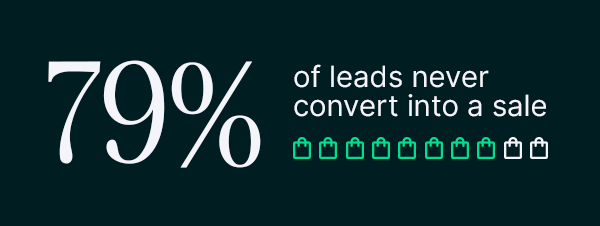
That gap is clear in the data. An estimated 79% of leads never convert into a sale, often failing to progress past qualification or early sales conversations. At the same time:
- 61% of marketers say generating high-quality leads is their biggest challenge
- 68% identify improving lead quality as their number-one priority
This is causing a huge disconnect, where marketing is pressured to produce plenty of activity, but rarely surfaces warm hand-raisers inside the accounts that actually matter.
The challenge is that buyers’ needs and operating conditions are changing quickly. The people companies sell to haven’t changed, but what they're dealing with has. Messaging that worked even 12 months ago can struggle to reflect the specific problems decision-makers are dealing with today, making relevance harder to recognize and where you fit harder to understand.
Why Buyer Needs Are Changing Faster Than Demand Models
Buying committees are well understood, but how they influence decisions is often misunderstood. Research from Forrester shows the average buying committee now includes 10-13 stakeholders across multiple departments and functions. That reflects the complexity of modern SaaS purchases and makes clarity harder to sustain.
AI-driven tool sprawl and tighter budgets have increased that complexity, raising scrutiny on short-term ROI and expanding the range of options buyers evaluate.
In response, demand teams often broaden messaging to stay relevant across the group. When teams are unsure which problems matter most to which roles, language becomes generic and the result is dilution: messages try to speak to everyone and end up moving no one.
Influence inside buying committees is rarely evenly distributed. Despite the number of people involved, momentum is often driven by a small number of problem owners (Gartner) who are accountable for solving the issue. Focusing on these roles helps messaging become more specific and grounded, giving the wider group something concrete to align around as more stakeholders get involved.
Marketing targets haven’t changed, but shifting buyer needs, larger committees, and more buying options mean the approach to engaging them has to change
A Smarter Approach to Converting Your Best-Fit Accounts
Broad, volume-led demand struggles in complex buying environments because it prioritizes scale over relevance. High-performing teams are responding by narrowing their focus to a clearly defined set of best-fit accounts and decision-makers, and designing demand programs that help those buyers recognize relevance and signal genuine intent.
This shift isn’t about doing more, but doing it with greater focus. It reflects a move toward understanding buyer needs through engagement, rather than assuming them upfront through segmentation. Demand programs are designed to invite interaction and surface clarity, rather than push every prospect through the same funnel, focusing attention on the accounts and individuals where genuine interest is emerging.
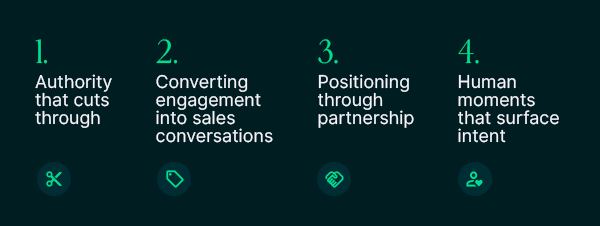
1. Authority that cuts through
In a market saturated with generic and increasingly AI-generated output, content only cuts through when it feels credible and specific. That matters because buyers themselves say content is too generic or irrelevant. To earn attention from the right accounts, content needs to look less like “more marketing” and more like insight buyers would actually trust and share.
- Build with third-party voices. Co-creating with recognized experts, practitioners, or complementary partners brings borrowed trust from the very first touch and makes the content feel grounded in reality.
- Let engagement do the filtering. When the insight is specific and credible, engagement becomes a clearer signal than raw form fills and it’s the kind of content that gets shared internally, where deals are won or lost.
2. Converting engagement into sales conversations
Converting best-fit accounts takes more than broad segmentation or surface-level personalisation. ABX works best when it functions as the conversion layer between engagement and sales follow-up, turning interest into a real reason to start a conversation.
- Let engagement earn the follow-up. Prioritise observable signals (repeat visits, deeper consumption, event attendance, replies) so outreach is rooted in what the buyer has already shown interest in, not assumptions.
- Hand Sales a reason, not a list. The goal is not more names, but a short set of engaged accounts with a clear narrative Sales can lead with, so follow-up feels timely and welcome.
3. Positioning through partnership
In crowded SaaS categories, buyers often struggle to understand where a solution fits within their existing stack. Partnerships help solve this by placing your message in a context buyers already trust, making it easier to understand what you do, who it’s for, and how it complements what they already use.
- Clarify where you fit. Partner-led stories make your role in the tech stack more obvious, reducing the “is this for us?” friction that slows evaluation.
- Make engagement easier to convert. When buyers understand fit sooner, follow-up becomes simpler: the conversation starts with shared context rather than re-explaining the category.
4. Human moments that surface intent
Smaller, focused events create space for meaningful, problem-led conversations that are difficult to achieve at scale. When the goal is to engage the right buyers, these moments work best when they bring together a curated group of best-fit accounts, shifting the focus from content consumption to discussion.
- Create dialogue, not just attendance. Roundtables, workshops, and focused sessions give buyers the opportunity to share priorities and explore challenges in a way one-way content cannot.- Make intent visible. Participation reveals who is actively evaluating, what’s driving urgency, and which topics are resonating.
- Open the door to one-to-one follow-up. When engagement happens in a shared setting, follow-up feels timely and relevant, creating a natural path into sales conversations.
Bringing Demand Back to Buyer Understanding
As buyer needs evolve and buying environments grow more complex, demand effectiveness depends less on scale and more on clarity. When teams lack a current understanding of what their best-fit buyers care about, volume becomes a substitute for confidence, and relevance becomes harder to sustain.
The best teams design demand programs that learn from buyers as much as they market to them, using engagement, conversation, and participation to test assumptions and recognize genuine interest when it appears.
Today, the advantage belongs to teams that truly understand their buyers, not those that simply generate more leads.
About the author
Chris Elliott
Kyn's Head of Market Insights Chris Elliott worked for ecommerce solution providers for over a decade providing insight and thought leadership to the world’s leading brands and retailers.
He is also a regular contributor to industry publications like The Grocer and Retail Week as well as national publications like The Guardian, Daily Telegraph and BBC Radio’s You and Yours.



Comments